
By: Dr. Jeff Feucht, Superintendent
Each year, the Lake County Educator of the Year awards provide an opportunity to recognize outstanding educators and staff members whose work strengthens schools, supports students, and lifts up the communities they serve. This year, District 117 was proud to celebrate six staff members who were nominated for Lake County Educator of the Year awards: Marta Castaneda, Megan Garcia, Whitney Walsh, Andrew Seketa, Taylor Travers, and Jake Mitchell!
I was honored to sit down to interview each of them to help share with you the excellent service they provide to our district every day. Their nominations were not only a recognition of individual excellence; they were also a reflection of the values we hope to develop in every District 117 graduate.
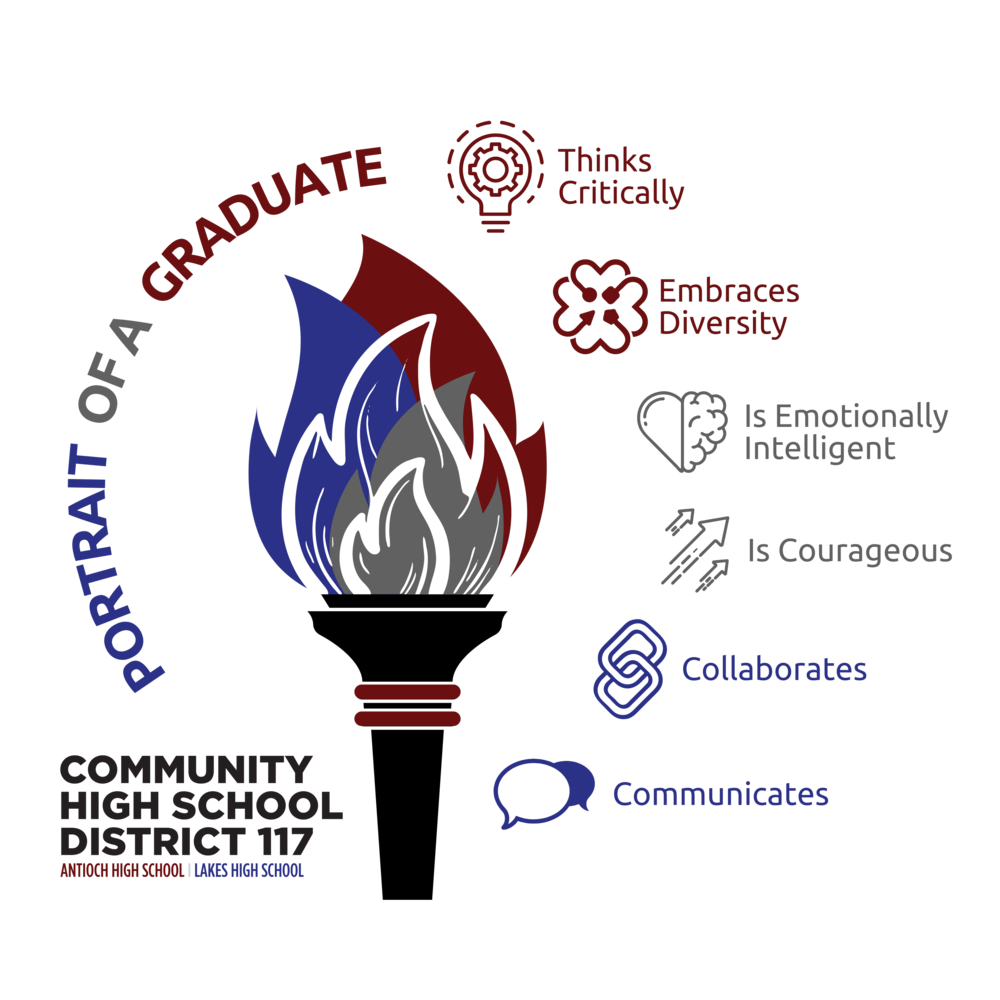
As in previous staff spotlights, I have highlighted our District 117 Portrait of a Graduate, which identifies six competencies we want students to develop during their four years in our schools. These competencies, “Communicates,” “Collaborates,” “Thinks Critically,” “Embraces Diversity,” “is emotionally intelligent,” and “is courageous” serve as the “North Star” for our programming, curriculum, instruction, and culture. The staff members featured here model these competencies in different ways, reminding us that the District 117 Portrait of a Graduate is not simply something we teach students; it is something our educators and staff live each day.
Marta Castaneda - HES
Nominated for Educational Service Personnel
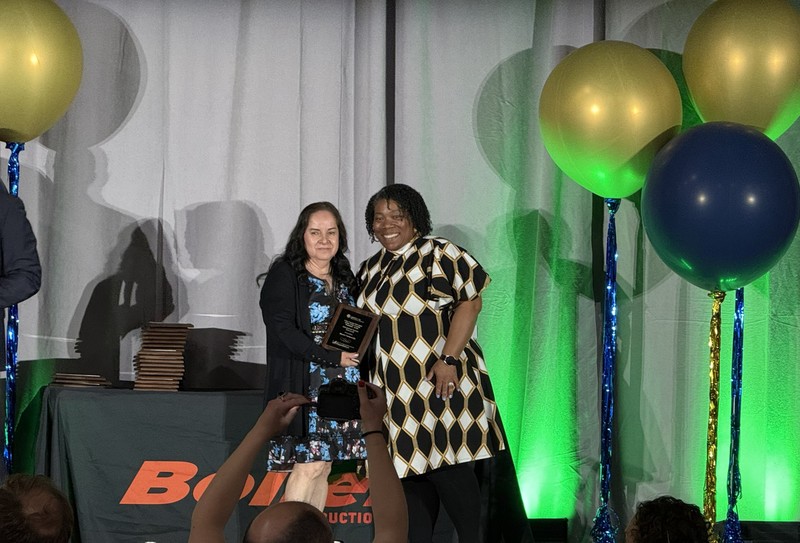
Ms. Marta Castaneda has served District 117 for 19 years. She began as a custodian and later moved into a lead role, where her work supports staff, students, coaches, colleagues, and the school's daily operations. During her interview, one colleague shared that when administrators at ACHS heard there was a meeting about Marta, they were immediately mortified that she was leaving for another job! Panic ensued! That reaction speaks volumes about how deeply she is appreciated across the district.
Ms. Castaneda shared with me that she loves her job, enjoys being responsible, and likes working with her team to ensure the school is presentable for the community. Staff describe her as a good leader, someone who does excellent work, treats people with kindness, and is always available when teachers, students, or coaches need support. She shared that people often tell her, “This is your home,” and after nearly two decades of service, it is clear that she has helped make the school feel like home for others as well.
Her work strongly reflects “Collaborates,” which asks students to “Inspire and motivate others through the sharing of ideas toward a common purpose,” “Take responsibility for self and team through shared, focused leadership,” and “Actively listen to discover mutual understanding by providing and receiving feedback.” As a lead, Ms. Castaneda helps her team solve problems, supports colleagues when coverage is needed, and provides steady assurance that the work will get done.
She also embodies “Communicates.” The competency asks students to “Articulate ideas effectively using clear and concise oral and written communication,” “Initiate and sustain meaningful conversation acting with empathy and respect in a variety of settings,” and “Consistently work toward developing an understanding of audience and self.” In a role that requires constant coordination, communication is essential. Ms. Castaneda communicates with patience, kindness, and clarity so people know what is needed and feel supported in the process.
Her leadership is also emotionally intelligent. The definition of “is emotionally intelligent” calls on students to “Practice responsible decision-making and consider impact on others,” “Build and sustain strong, healthy relationships with peers and adults,” and “Employ a growth mindset that includes self-regulation, motivation, and resiliency.” Ms. Castaneda remains calm, steady, and positive even when the work is busy or when unexpected problems arise. She is attentive to safety, reminding colleagues that everyone has a family waiting at home and that working safely matters.
Her response to challenges also reflects “Thinks Critically,” where students “Leverage curiosity to identify and solve problems while taking intellectual risks,” “Examine and challenge assumptions in making decisions based on a thorough understanding of authentic evidence,” and “Consistently improve the quality of one’s own thinking by skillfully analyzing, assessing, and reconstructing.” In facilities and custodial work, problem-solving is constant. Ms. Castaneda assesses needs, coordinates coverage, supports the team, and helps ensure the school environment is safe, clean, and ready for students and staff.
Ms. Castaneda’s service reminds us that excellent schools are built by many hands. Her pride, consistency, kindness, leadership, and deep commitment to the district make her a model of service and a treasured member of the District 117 community!
Megan Garcia - LCHS
Nominated for Classroom Diverse Learner Teacher
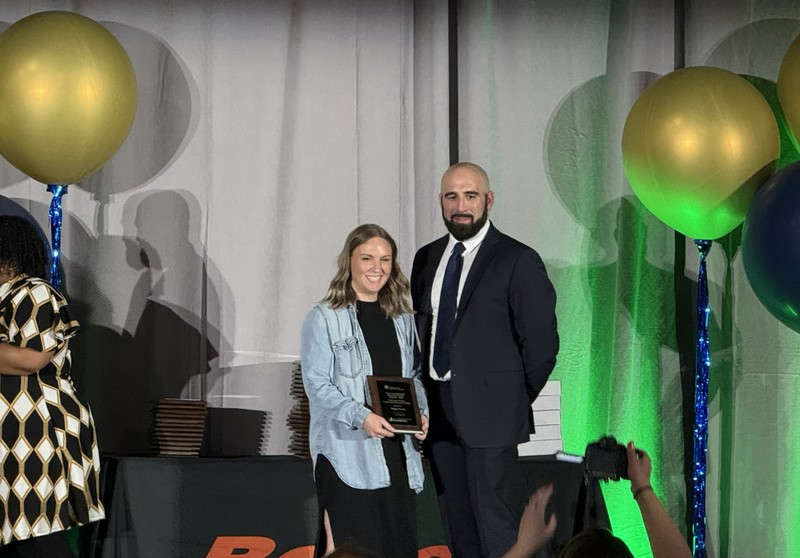
Ms. Megan Garcia’s connection to Lakes Community High School runs deep! A Lakes graduate from the Class of 2011, she returned to the district after beginning her career in middle school settings at Prairie Grove and Grayslake. When a position opened at Lakes in 2020, she described it as the only high school where she truly wanted to work. Today, she serves students through co-taught U.S. History, instructional U.S. History, instructional English 3, and supported study hall.
That combination of U.S. History and English 3 has become one of the great strengths of her work. Ms. Garcia helps students see the connections between literature, history, culture, and argument. When students are reading American literature and studying the same historical era in U.S. History, she helps them understand why a writer included certain details, how historical context shapes a text, and how evidence can deepen their understanding. This is a powerful example of “Thinks Critically,” which asks students to “Leverage curiosity to identify and solve problems while taking intellectual risks,” “Examine and challenge assumptions in making decisions based on a thorough understanding of authentic evidence,” and “Consistently improve the quality of one’s own thinking by skillfully analyzing, assessing, and reconstructing.”
Ms. Garcia’s classroom is known for high expectations and meaningful discussion. She asks students to articulate what they mean, support their thinking with evidence, and consider perspectives that may differ from their own. She described her pride in being open-minded and said she wants students to understand that “there’s always a perspective to look at that’s not yours.” In a U.S. History classroom, that mindset is essential. It is also a clear example of “Embraces Diversity,” where students “Find opportunities to embrace and affirm one's authentic self,” “Actively work to develop empathy for others,” and “Identify own biases and reflect to reduce impact on others.”
Her work also reflects “Communicates,” which calls on students to “Articulate ideas effectively using clear and concise oral and written communication,” “Initiate and sustain meaningful conversation acting with empathy and respect in a variety of settings,” and “Consistently work toward developing an understanding of audience and self.” For Ms. Garcia, communication is not limited to academic language. She wants students to learn how to explain what they know, as well as how to express what they need socially and emotionally. She sees communication as a cornerstone of success and productivity in the world.
Ms. Garcia also embodies “Collaborates” through her commitment to co-teaching and community. She spoke movingly about her partnership with Ms. Jarosz, describing the way their professional relationship supports students while also strengthening her as an educator. That partnership models the definition of “Collaborates”: “Inspires and motivates others through the sharing of ideas toward a common purpose,” “Takes responsibility for self and team through shared, focused leadership,” and “Actively listens to discover mutual understanding by providing and receiving feedback.”
Perhaps what makes Ms. Garcia’s service most special is that she is helping shape the same community that shaped her. She lives in the community, raises her children here, and teaches students who may one day become her neighbors, colleagues, and fellow community leaders. Her work is rooted in a deep belief that Lakes is a place where students can become thoughtful, open-minded, kind, and capable people!
Whitney Walsh - ACHS
Nominated for Classroom High School Teacher
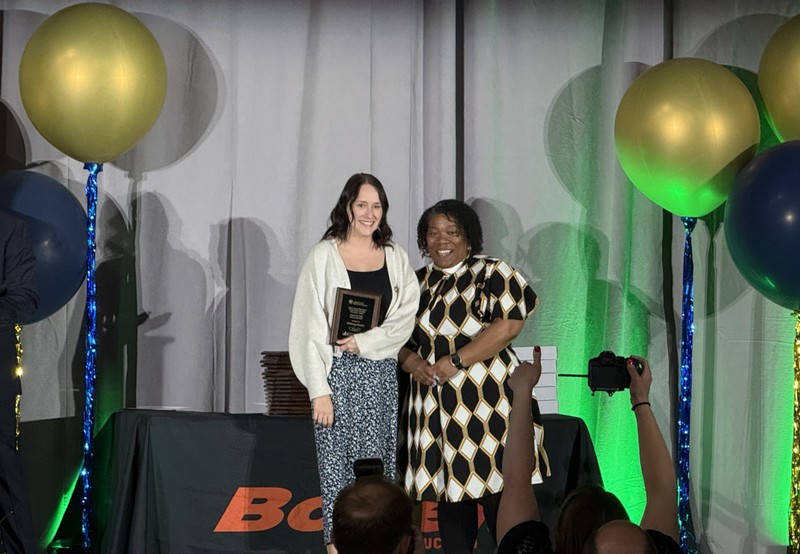
Ms. Whitney Walsh has served District 117 for ten years. She began at Lakes, traveled between buildings during the 2020-21 school year, and has been teaching full-time at Antioch Community High School since the 2021-22 school year. A social studies teacher and instructional coach, she has taught sociology, global studies, U.S. History, AP Human Geography, and government. Her current schedule gives her a unique view of the student journey: she works with freshmen near the beginning of high school and seniors as they prepare to leave it!
Ms. Walsh’s passion for AP Human Geography and government is contagious. She loves helping students see that human geography is everywhere, from the layout of a city, to migration patterns, to what they see in the news, to the way a movie like Zootopia can connect to every unit in the course. In government, she helps students understand how to participate in civic life, why voting matters, and how to care about issues enough to advocate for them.
This year, Ms. Walsh has taken on a new challenge through project-based learning in AP Human Geography. Students are applying course concepts to authentic problems, including an urban design challenge in which they identify a design issue in Antioch and recommend improvements. This approach reflects “Thinks Critically,” which asks students to “Leverage curiosity to identify and solve problems while taking intellectual risks,” “Examine and challenge assumptions in making decisions based on a thorough understanding of authentic evidence,” and “Consistently improve the quality of one’s own thinking by skillfully analyzing, assessing, and reconstructing.” Her students are not only learning geography; they are using geography to better understand and improve the world around them.
Ms. Walsh also spoke powerfully about “is courageous,” a competency she helped advocate for on our 2023 committee when the Portrait of a Graduate was first developed. The definition challenges students to “Create, monitor and reflect upon ambitious goals” and “Advocate for self and others in a socially responsible and empathetic manner.” She believes students need safe spaces to take risks, do hard things, and fail in ways that lead to growth. She tells students, “You worry about the learning, I will worry about your grades,” helping them shift from grade-chasing to genuine learning.
That same courage shows up in her own teaching. While implementing new project-based learning materials, she openly adjusted when a lesson did not meet students’ needs. Rather than pretending everything worked perfectly, she modeled flexibility, humility, and improvement. Her students saw an educator willing to take risks, reflect, revise, and keep going!
Ms. Walsh’s classroom is also deeply collaborative. She asks students to take academic risks together, present together, solve problems together, and recognize one another’s efforts. A simple gold star tradition grew into a student-driven way to celebrate peers who tried hard or contributed meaningfully. In another project, students created a “World’s Farm Expo” on sustainability in farming, exploring topics such as aquaculture and alternative protein sources. These examples embody “Collaborates,” where students “Inspire and motivate others through the sharing of ideas toward a common purpose,” “Take responsibility for self and team through shared, focused leadership,” and “Actively listen to discover mutual understanding by providing and receiving feedback.”
Ms. Walsh brings energy, intellectual curiosity, and joy to ACHS. She helps students become “tiny citizens of the world” who understand their communities, think critically about problems, and have the courage to participate in shaping the future!
Andrew Seketa - LSA & ACHS
Nominated for School Administrator
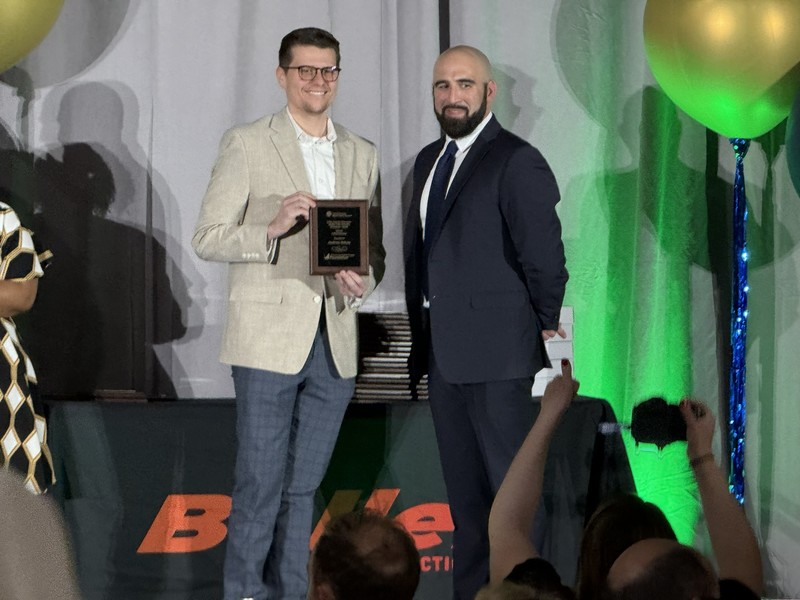
Mr. Andrew Seketa is a lifelong District 117 educator in the truest sense. A Lakes Community High School graduate from the Class of 2010, he began his career in the district in 2014 as a special education teacher at Antioch. He later became part of the team that expanded the district’s transition program, helped facilitate its move to Peacock Camp, supported the creation of a jobs program, and eventually moved into a coordinator and administrative role supporting Life Skills Academy and transition services.
Although Mr. Seketa now serves in an administrative role, he still sees himself as a teacher. Much of his work involves teaching families how to navigate complex systems, including government agencies, long-term planning, employment supports, and the difficult transition from school to adult life. This year, he introduced Summit Meetings, hour-long conversations designed to help families slow down, identify gaps, name fears, and create a clearer path forward!
His work with the vocational program also provides students with authentic opportunities to build workplace readiness skills. Through partnerships with local businesses, students experience what it means to work outside the classroom, interact with the public, communicate with coworkers and managers, and practice the soft skills needed to participate in employment environments.
For Mr. Seketa, the primary lens for this work is “is emotionally intelligent.” The competency asks students to “Practice responsible decision-making and consider impact on others,” “Build and sustain strong, healthy relationships with peers and adults,” and “Employ a growth mindset that includes self-regulation, motivation, and resiliency.” He explained that emotional intelligence is sometimes undersold in transition work, even though it is foundational. Before students can communicate effectively, collaborate, think critically, or approach new environments, they often need support in understanding who they are, how they respond to the world, and how to sit with uncertainty.
One of the most powerful phrases Mr. Seketa used was “sit with a scary unknown.” He sees one of the great responsibilities of educators as sitting beside students and reminding them that it is okay not to have all the answers yet. When students can regulate their emotions and begin to understand themselves, they are better prepared to learn, communicate, work, and grow.
Mr. Seketa also spoke proudly of his team's courageous culture. They are willing to try new ideas, see what works, and treat unsuccessful attempts as feedback. That reflects “is courageous,” which asks students to “Create, monitor and reflect upon ambitious goals” and “Advocate for self and others in a socially responsible and empathetic manner.” By fostering a team culture where staff feel safe to try, reflect, and improve, he models the same courage we hope students will develop.
His work also beautifully embodies “Embraces Diversity.” This competency calls on students to “Find opportunities to embrace and affirm one's authentic self,” “Actively work to develop empathy for others,” and “Identify own biases and reflect to reduce impact on others.” Mr. Seketa helps the community see that disability does not mean a person is broken; rather, society is not always built for every person. By helping students be seen in local workplaces and helping businesses recognize the talents of students they might otherwise overlook, he expands opportunity and inclusion.
One story Andrew shared with me captured the impact of this work. Mr. Seketa described running into a former transition student who had once been convinced she could not do many things, including driving or working. Years later, she approached him in a store where she was serving as an assistant manager, excited to share that she had earned her driver’s license and was thriving in her role. That moment reflected a student living her own version of success, and the kind of courageous growth District 117 hopes for every student!
Taylor Travers - ACHS
Nominated for Student Support Personnel
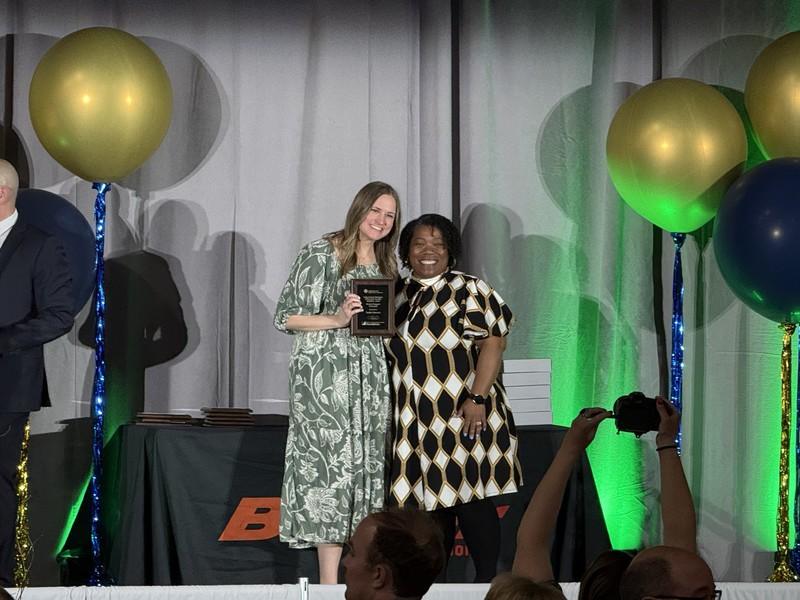
Ms. Taylor Travers has spent all nine years of her school counseling career at ACHS. As a member of the Student Services team, she supports students across academic planning, social-emotional growth, and college and career readiness. Because counselors often work with students over four years, Ms. Travers has the special privilege of watching students grow from eighth grade enrollment through graduation.
One of her greatest points of pride is the first-generation college-bound student group she started and continues to lead with college and career counselor Kelly McCracken. The group, often referred to as Future Focus, supports students whose parents have not graduated from a traditional four-year college. It begins during junior year and continues into senior year, providing students with guidance on college research, career exploration, applications, financial aid, and finding the right fit.
What makes the group especially powerful is that it is not only about forms, deadlines, and applications. Ms. Travers and Ms. McCracken intentionally weave in the social-emotional experience of being a first-generation college student. Students discuss what it feels like to be the first in their family to pursue this path, how families may feel about the transition, what obstacles might arise, and how to respond with resilience.
That work is a strong example of “is emotionally intelligent,” which asks students to “Practice responsible decision-making and considers impact on others,” “Build and sustain strong, healthy relationships with peers and adults,” and “Employ a growth mindset that includes self-regulation, motivation, and resiliency.” Ms. Travers teaches students to name challenges and then consider resilient responses. When students face rejection, financial aid obstacles, uncertainty, or fear, she helps them ask: What would a resilient response look like here?
Her work also embodies “Collaborates.” The competency asks students to “Inspire and motivate others through the sharing of ideas toward a common purpose,” “Take responsibility for self and team through shared, focused leadership,” and “Actively listen to discover mutual understanding by providing and receiving feedback.” Ms. Travers collaborates with colleagues, students, families, and other counselors across the state. After presenting about the first-generation group at the Illinois School Counselor Association conference, she continued to hear from counselors seeking lesson plans and ideas. In that way, her work has supported not only ACHS students but also educators beyond our district.
Ms. Travers also describes advocacy as central to school counseling. She sees herself as an advocate for students and is equally committed to empowering students to advocate for themselves. That connects directly to “is courageous,” where students “Create, monitor and reflect upon ambitious goals” and “Advocate for self and others in a socially responsible and empathetic manner.” Whether students are asking questions about FAFSA, talking through family expectations, sharing concerns about mental health, or seeking help during moments of grief, identity development, or peer conflict, it takes courage to be vulnerable.
Students in the Future Focus group have described the power of being surrounded by peers who are asking similar questions and facing similar uncertainties. They shared that the group helped them feel more comfortable, more connected, less alone, and more prepared for the next chapter of life. That is the heart of Ms. Travers’s impact: she creates a safe, nonjudgmental, supportive environment where students can be vulnerable, build confidence, and take meaningful steps toward their future!
Jake Mitchell - LCHS
Nominated for Early Career Educator
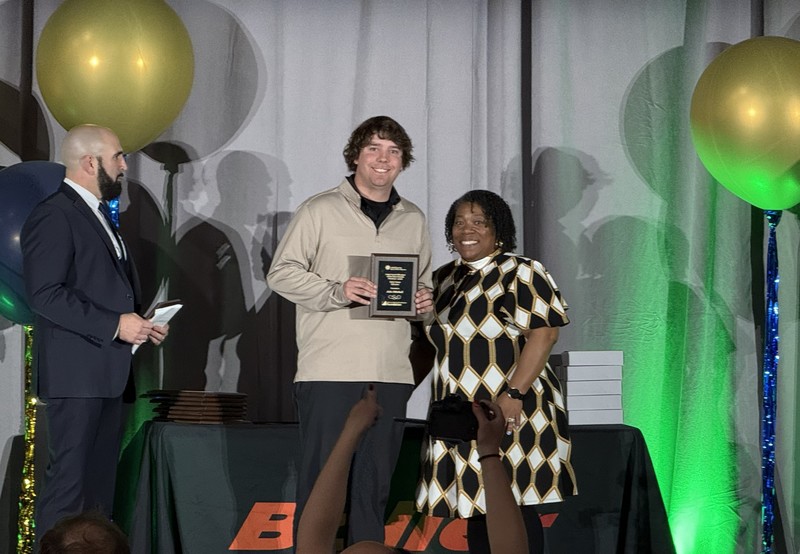
Mr. Jake Mitchell’s path into teaching began in an unusual way. Because of COVID, much of his pre-service teaching experience was virtual. He described student teaching to silent screens, sometimes going through a day without hearing some students speak. In that environment, the students who said hello, goodbye, or turned on their cameras helped him understand something that has become central to his teaching: relationships matter.
Now, as a math teacher at LCHS, Mr. Mitchell leads with connection. He makes it a goal to know every student, greet students by name, give fist bumps in the hallway, and ask about their sports, clubs, activities, performances, and plans. He uses students’ names throughout class because he knows that some students may go through much of the day without hearing their name spoken by an adult.
That daily commitment reflects “is emotionally intelligent,” which asks students to “Practice responsible decision-making and consider impact on others,” “Build and sustain strong, healthy relationships with peers and adults,” and “Employ a growth mindset that includes self-regulation, motivation, and resiliency.” Mr. Mitchell builds relationships not as an add-on to teaching, but as the foundation that makes teaching possible. When students know he cares about them as people, they are more willing to ask for help, accept feedback, attend tutoring, and engage in difficult conversations about growth.
His relationship-building also reflects “Communicates.” This competency calls on students to “Articulate ideas effectively using clear and concise oral and written communication,” “Initiate and sustain meaningful conversation acting with empathy and respect in a variety of settings,” and “Consistently work toward developing an understanding of audience and self.” Mr. Mitchell models meaningful communication in small but powerful ways. He asks students questions that show he remembers who they are, what matters to them, and what they are working toward.
Mr. Mitchell is also intentional about “Embraces Diversity.” As a coach and sports fan, he knows it could be easy for students to assume he connects most naturally with athletes. He makes a deliberate effort to start conversations in different places around the room, ask every student about their interests, and attend or follow a wide range of student activities, including games, musicals, and other events. That practice reflects the competency where students “Find opportunities to embrace and affirm one's authentic self,” “Actively work to develop empathy for others,” and “Identify own biases and reflect to reduce impact on others.”
He also helps students see mistakes as learning experiences. He tells students he is there to build them up as people and will never tear them down for making a mistake. Because of the trust he establishes, he can have honest conversations with students about what did not go well, what needs to change, and how to move forward. This is a quiet but powerful form of “is courageous,” where students “Create, monitor, and reflect upon ambitious goals” and “Advocate for self and others in a socially responsible and empathetic manner.”
For an early career educator, Mr. Mitchell already offers a lesson that veteran educators know well: students learn more when they feel known, valued, and supported. His classroom shows how a positive environment built on relationships can make students more willing to take academic risks and seek the help they need!
Celebrating Excellence Across District 117
Each of these nominees serves District 117 in a different role, but together they tell a shared story about who we are as a district. Ms. Garcia challenges students to communicate, think critically, and develop empathy for perspectives beyond their own. Ms. Walsh creates classrooms where students do hard things together and learn to see the world through social studies. Mr. Seketa helps students and families navigate transition with emotional intelligence, courage, and dignity. Ms. Travers empowers students to advocate for themselves and pursue futures that may once have felt uncertain. Mr. Mitchell builds relationships that help students feel known and ready to learn. Ms. Castaneda leads with pride, kindness, teamwork, and dependable service.
Their nominations for Lake County Educator of the Year awards are well deserved! More importantly, their daily work reflects the best of District 117. They are role models of our Portrait of a Graduate and, through their service, help ignite passion and discovery in every student!